
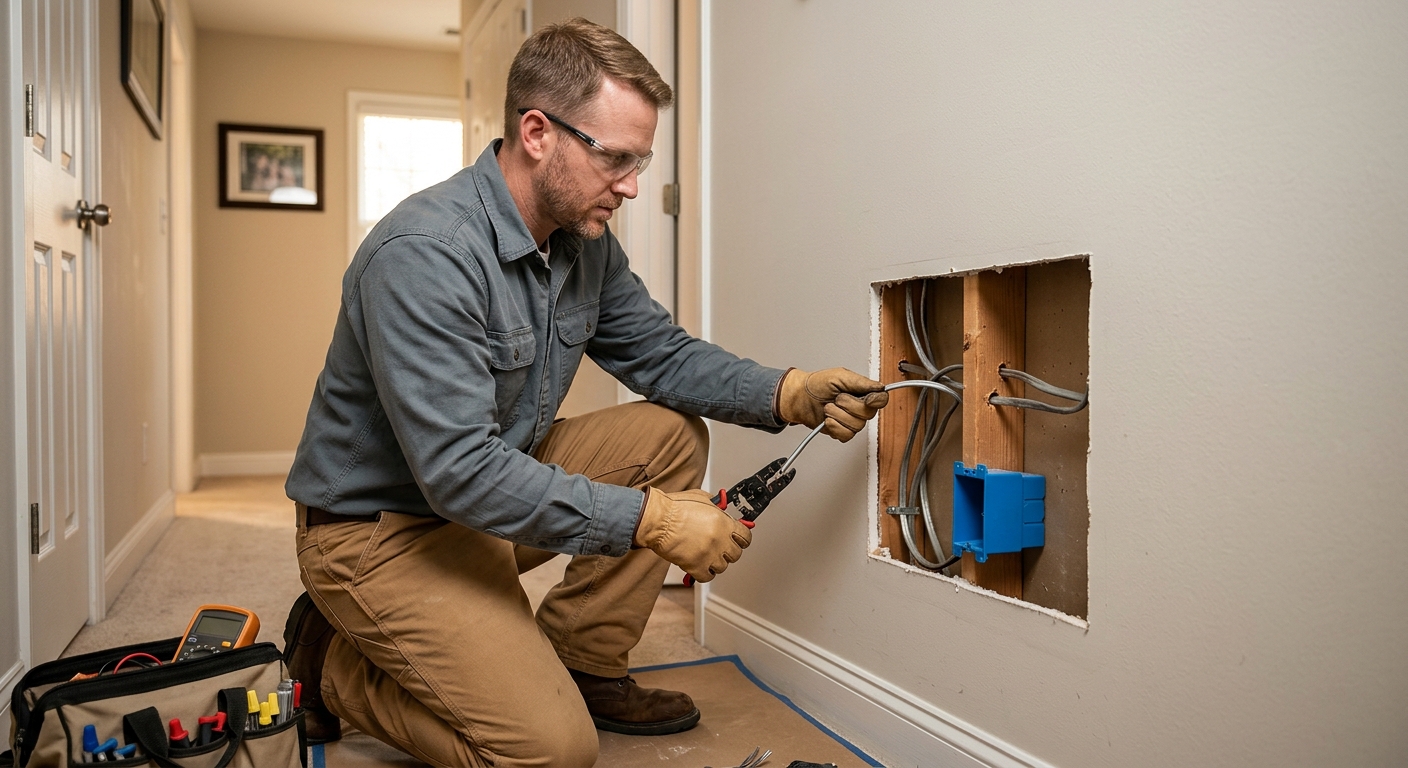
If your home was built between 1965 and 1973, there is a real possibility that aluminum branch circuit wiring runs behind your walls. During that era, copper prices surged, and builders turned to aluminum as a cheaper alternative for 15- and 20-amp circuits. Today, aluminum wiring replacement is one of the most important safety upgrades a homeowner in Metro Atlanta can undertake. Roughly two million homes across the United States were wired with aluminum branch circuits during that window, and many of those homes have never been remediated. Understanding the risks, knowing how to identify the problem, and choosing the right fix can protect your family and your property for decades to come.
Why Aluminum Branch Circuit Wiring Is Dangerous
Aluminum is a perfectly acceptable conductor for large-gauge utility feeds and certain appliance circuits. The concern applies specifically to the smaller-gauge aluminum wiring (typically 14- and 12-gauge) used for outlets, switches, and lighting circuits in residential construction. The problems stem from aluminum’s physical properties:
- Higher rate of thermal expansion. Aluminum expands and contracts more than copper when it heats up under load. Over years of cycling, connections loosen at terminals, outlets, and splice points.
- Oxidation. When aluminum is exposed to air, it forms aluminum oxide on its surface. Unlike copper oxide, which still conducts electricity reasonably well, aluminum oxide is highly resistive. Resistive connections generate heat.
- Softness and creep. Aluminum is a softer metal than copper. When a screw terminal is tightened down on an aluminum wire, the metal slowly deforms under pressure, a phenomenon called “creep.” This further loosens connections over time.
The combination of these factors means that connection points in an aluminum-wired home become progressively more hazardous. The U.S. Consumer Product Safety Commission (CPSC) has stated that homes with aluminum wiring are 55 times more likely to have one or more connections reach fire-hazard conditions compared to homes wired with copper. That statistic alone makes aluminum wiring replacement a serious consideration for any homeowner who discovers it in their property.
How to Identify Aluminum Wiring in Your Home
You may not know what type of wiring your home has unless you look. Here are some ways to check:
- Check the panel. Open your electrical panel cover (do not touch any wires or breakers) and look at the conductors entering the breakers. Aluminum wire has a dull, silvery appearance compared to the warm orange tone of copper.
- Look at exposed wiring. In unfinished basements, attics, or garages, you can sometimes see the jacket printed on NM cable. Aluminum Romex-style cable is often marked with “AL” or “Aluminum” on the outer sheathing.
- Check the year your home was built. Homes built in Georgia between roughly 1965 and 1973 are in the prime window. Some homes built as late as the mid-1970s also used aluminum branch circuits.
- Schedule a professional evaluation. The most reliable approach is to have a licensed electrician perform a thorough electrical inspection. A professional can confirm the wiring type, assess the condition of connections, and identify any signs of overheating or arcing that may already be present.
If you notice discolored outlet covers, a faint burning smell near switches, intermittent flickering lights, or outlets that feel warm to the touch, these could be warning signs of failing aluminum connections. Do not ignore them.
Remediation Options: Full Rewire vs. COPALUM and AlumiConn Pigtails
Homeowners who discover aluminum branch wiring generally have two recognized remediation paths.
Full Copper Rewire
A complete wiring and rewiring of the home with copper conductors is the most comprehensive solution. Every aluminum branch circuit is removed and replaced with copper. This eliminates the hazard entirely and brings the home up to current National Electrical Code standards. A full rewire is especially practical during a major renovation when walls are already open. It is the gold standard for aluminum wiring replacement, and it also tends to improve a home’s resale value and insurability.
Approved Pigtail Connectors
When a full rewire is not feasible, the CPSC recognizes two approved methods for making aluminum-to-copper connections at every device, switch, and junction box:
- COPALUM crimp connectors. These use a specially calibrated crimping tool to permanently join a short copper pigtail to the existing aluminum conductor. The connection is then protected with an insulating sleeve. COPALUM connectors require a licensed electrician trained and equipped with the proprietary tool.
- AlumiConn connectors. These are set-screw lug-style connectors rated specifically for aluminum-to-copper transitions. They are listed by the CPSC as an acceptable alternative to COPALUM. Each connection point in every outlet, switch, and junction box in the home must be addressed for the remediation to be effective.
Both methods require opening every electrical box in the home and treating every connection. Partial remediation does not adequately address the risk.
Frequently asked questions
Is aluminum wiring illegal in Georgia?
Aluminum branch circuit wiring is not illegal, and homes with aluminum wiring are not in code violation simply for having it. However, the known risks are well documented by the CPSC, and many insurance companies in Georgia either require remediation or adjust premiums when aluminum wiring is present. Having an aluminum wiring replacement completed can resolve insurance concerns and significantly reduce fire risk.
Can I just replace the outlets and switches with “CO/ALR” rated devices?
CO/ALR rated devices were designed for use with aluminum wiring, but the CPSC does not consider simply swapping to CO/ALR outlets a complete repair. The issue is that every splice and junction, not just the device terminals, needs to be addressed. CO/ALR devices are better than standard outlets but do not solve the problem at all connection points.
How long does aluminum wiring replacement take?
The timeline depends on the size of the home and the method chosen. A pigtail remediation of a typical three-bedroom home may take one to two days. A full copper rewire takes longer, often several days to a week or more, depending on accessibility and whether walls need to be opened. Your electrician can give you a realistic timeframe after an inspection.
Will my homeowner’s insurance drop me if I have aluminum wiring?
Some insurers in Georgia will decline to write or renew a policy on a home with unmitigated aluminum wiring. Others may require an inspection and proof of remediation. If you are buying, selling, or refinancing a home, this is a question worth asking your insurance agent early in the process.
Aluminum wiring does not have to be a crisis, but it does demand attention. Whether you need a professional assessment or you are ready to discuss your aluminum wiring replacement options, the team at Kalahari Electrical Services is here to help. We have been serving Metro Atlanta homeowners since 2001, and our licensed electricians have the training and experience to handle every remediation method discussed above. Give us a call at 678-665-2309 to schedule your evaluation.

![Common Electrical Code Violations in Atlanta Homes [2026] - Kalahari Electrical Services](https://kalahari-electrical.com/wp-content/uploads/2026/06/electrical-code-violations-atlanta.jpg)
![Electrical Panel Brands: Which Are Reliable and Which to Avoid [2026] - Kalahari Electrical Services](https://kalahari-electrical.com/wp-content/uploads/2026/06/electrical-panel-brands.jpg)
